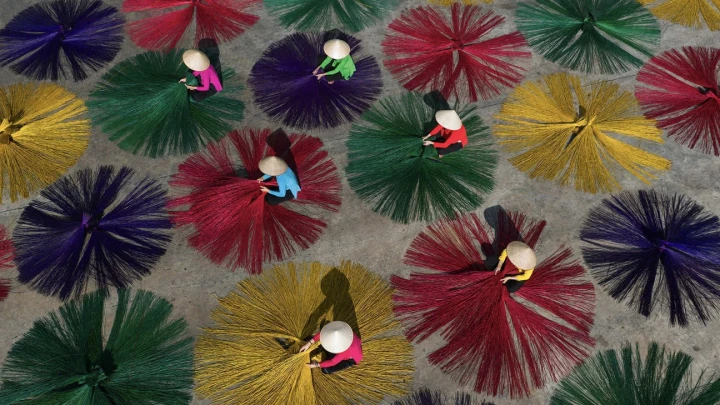
Golden Vietnam Photo Tour
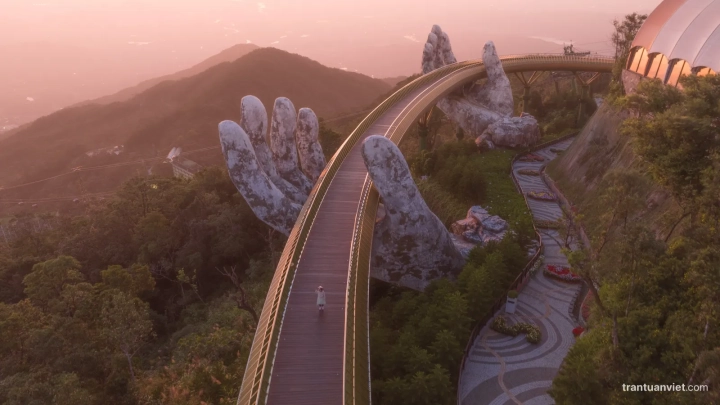
Golden Bridge
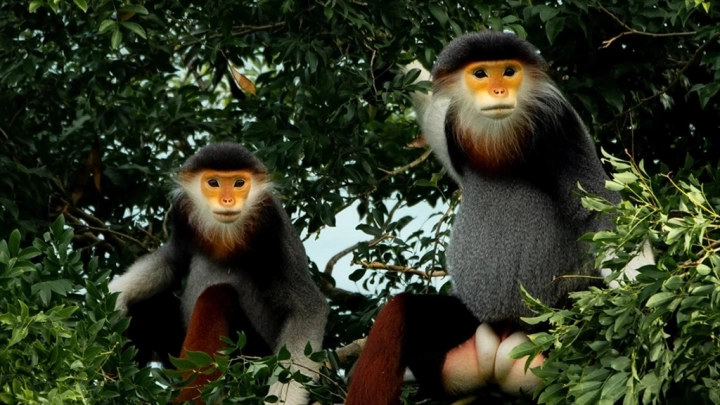
Red Shank Douc Vietnam
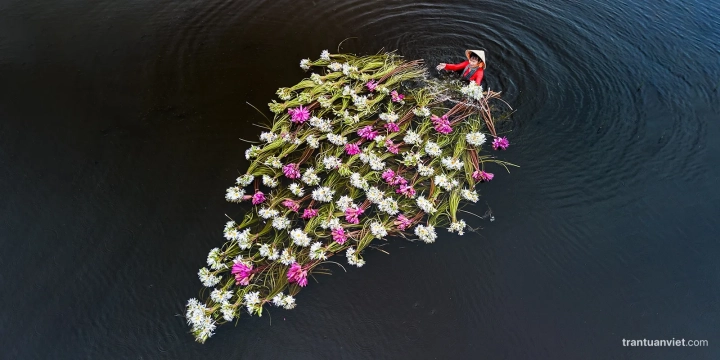
Waterlily
Vietnam isn’t just a destination; it is a high-resolution dream for those who speak the language of apertures and shutter speeds. To the casual traveler, it’s a land of street food and motorbikes. But to a photographer, it’s a living museum of texture and light. During the Vietnam in Focus Photo Tour, we immerse ourselves in the "Golden Season"—autumn—where the landscape undergoes a dramatic chromatic shift. Imagine the visual cacophony of Hanoi’s heritage villages at dawn—the blue-grey haze of charcoal stoves mixing with the warm glow of artisanal workshops. This is where the cultural heart of Vietnam beats loudest.
From the intricate geometry of a Hmong woman’s hand-woven textile in Mu Cang Chai to the sweeping, mathematical curves of the northern rice terraces, the country offers a narrative depth that few places can match. As a photographer, you aren’t just looking for "pretty" scenes; you are hunting for the decisive moment where the human spirit meets a landscape that has been sculpted by hand for a thousand years. Whether you’re framing the scarlet explosion of an incense village or the quiet, weathered dignity of an elder in Hoi An, you’re engaging with a culture that wears its history on its sleeve. This expedition is designed to bridge the gap between travel and art, ensuring every shutter click contributes to a cohesive, professional-grade portfolio.
Tour Summary
- Duration: 10 days 9 nights
- Tour starts: Hanoi (HAN)
- Ending place: Da Nang (DAD)
- Difficulty: Easy / Accessible
- Group size: Limited to 6 guests
Destinations
- Hanoi Capital & Hung Yen
- Phu Tho tea hills & Mu Cang Chai rice terraces
- Hue Imperial City & Coastal Lagoons
- Hoi An Ancient Town
- Golden Bridge (Ba Na Hills)
Included
- Luxury 5-star Accommodation
- Private Transport & Domestic Flight
- All Gourmet Meals (Full Board)
- Site Permits & Model Fees
- Official Drone Licensing
- Expert Photo Mentor (Canon Ambassador)
Photography Workshops
- Advanced Composition & Lighting
- Visual Storytelling & Documentary
- Environmental Portraiture
- Landscape & Drone Masterclass
- Lightroom Post-Processing
Accommodation
- All Premium 5-star Lodging
- Hanoi: Novotel Suites Hanoi
- Phu Tho: Muong Thanh Luxury
- Mu Cang Chai: Garrya Resort
- Hue: Melia Vinpearl Hue
- Da Nang: Mercure Ba Na Hills
- Hoi An: Wafaifo Resort
Transportation
- Luxury 6-seat SUV / 12-seat Van
- Guaranteed Window Seats
- Private Scenic Boat Trips
- Regional Domestic Flight
- Professional English-speaking Drivers
- Refreshments & Bottled Water
Why Photographers Go There
Photographers are drawn to Vietnam because of its unrivaled diversity of subjects condensed into a single geographic corridor. Within a ten-day journey, you can transition from the high-contrast, chaotic street photography of a major metropolis to the minimalist, ethereal landscapes of the northern highlands. It is one of the few places on Earth where "environmental portraiture" feels entirely organic. In the mountains of Mu Cang Chai, the Hmong people don’t just farm; they create massive land art. Their terraces aren't mere agricultural plots; they are topographic masterpieces that play with light in ways that defy simple description.
The technical appeal lies in the layers. Vietnam is a land of depth—both literal and figurative. For the landscape artist, the rolling tea hills of Long Coc provide endless opportunities for "stacking" compositions, where dome-shaped hills fade into soft, atmospheric gradients of green and blue. For the street photographer, the layers are human. The interaction between the vibrant primary colors of the traditional markets and the deep, moody shadows of the ancient alleyways allows for a play on Chiaroscuro that would make a Renaissance painter jealous. This tour provides the essential access needed to photograph these layers without the interference of heavy tourism.
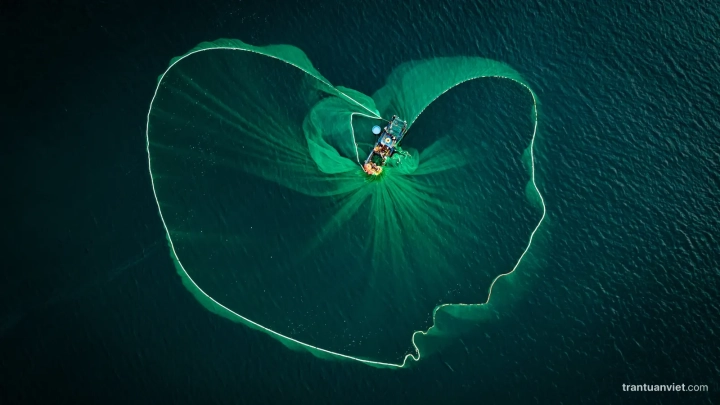
Furthermore, we offer exclusive access to rare "visual treasures." Capturing the Red-shanked Douc Langur—the "Queen of Primates"—requires patience and technical precision, offering a wildlife element that perfectly complements the cultural and landscape pillars of the region. It’s this multi-disciplinary challenge that makes the country a playground for the serious artist. We focus on the "hero shots" that define a professional portfolio: the top-down drone view of scarlet incense bundles, the intimate focus on an artisan's weathered hands, and the vast amphitheaters of golden rice under a setting sun.
The Alchemy of Light: Seasonal Dynamics
In Vietnam, light is a seasonal currency. Understanding the "Photographic Calendar" is the difference between a snapshot and a masterpiece. Autumn (September to October) is widely considered the "Golden Season." This is the peak of the harvest in the North, where the rice terraces transform from a lush emerald to a brilliant, saturated yellow. The humidity drops, the skies clear, and the Golden Hour lasts just a bit longer, casting a honey-toned glow over the ripening grain that makes the landscape "pop" with incredible dynamic range.
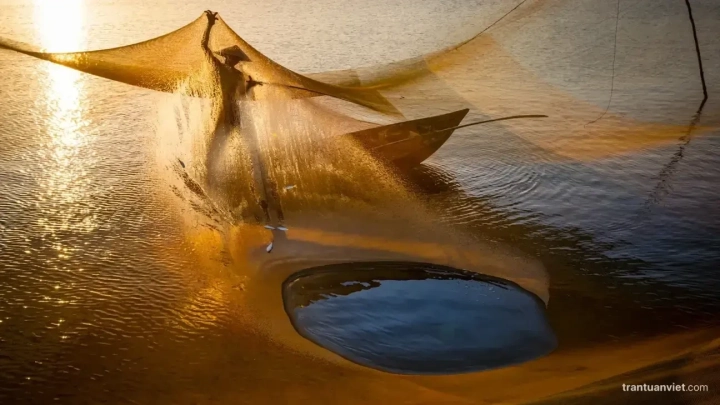
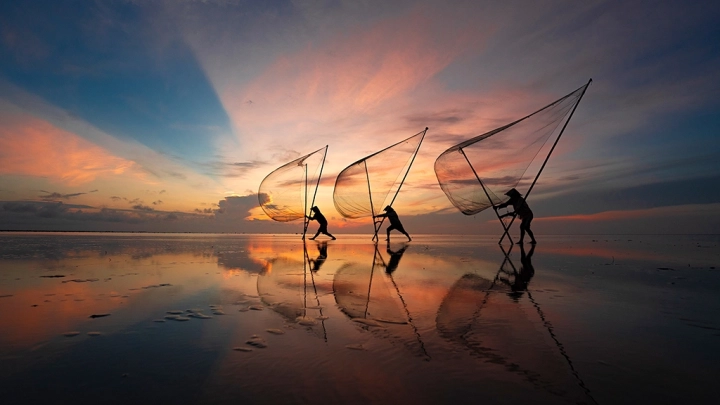
As we move from the highlands to the central coast, the weather pattern shifts to accommodate the ethereal. In Hue and Hoi An, autumn light is soft and diffused, perfect for environmental portraits. The morning mist over the Perfume River acts as a natural softbox, reducing harsh shadows and allowing for a painterly quality in your frames. This is the ideal time to experiment with Long Exposure on the coastal lagoons, turning the movement of traditional fishing boats into smooth, ghostly streaks across the water.
Technically, autumn presents a manageable challenge for modern sensors. The clarity of the air allows for high-detail drone photography, while the predictable sunrise/sunset times allow us to plan every shoot to the minute. We prioritize the Blue Hour in Hoi An, where the glow of silk lanterns creates a perfect balance with the deep blue of the twilight sky. Throughout the tour, we teach you how to read these shifting conditions, adjusting your white balance and exposure compensation to capture the true "soul" of the Vietnamese autumn.
What to Expect Visually
Expect a sensory overload that demands a "subtractive" approach to composition. Vietnam is visually dense; your job, under our mentorship, is to find the quiet within the chaos. You can expect to encounter four primary visual themes:
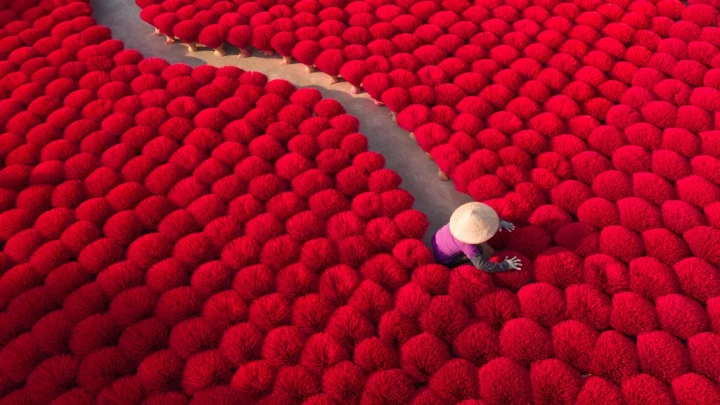
- Geometric Precision: Whether it is the concentric circles of a "Mam Xoi" rice hill or the thousands of incense sticks arranged like floral bouquets in Quang Phu Cau, you will find patterns that seem designed specifically for the 3:2 frame.
- High-Chroma Palette: The colors here are unapologetic. Saffron-yellow walls in Hoi An, vermillion palace gates in Hue, and the electric green of highland tea hills. We will work heavily with Color Theory, looking for complementary schemes that give your images professional impact.
- Human Texture: Expect faces that tell stories. The deep-set wrinkles of an elderly grandmother or the focused expression of a master mask-painter provide textural detail that is a masterclass in portraiture.
- Aerial Wonders: Vietnam from 120m up is a different world. The "leading lines" of irrigation canals and the "Horse-shoe" curves of the northern terraces are built for Drone Masterpieces.
Be prepared for a journey that tests every lens in your bag. You will move from wide-angle vistas requiring $f/11$ and a tripod to candid street moments where you’re shooting wide open at $f/1.8$ to isolate a subject. It is a diverse visual feast that ensures no two days—and no two photos—are ever the same.
This isn’t about ticking boxes on a tourist map; it’s about a shared creative pursuit. Capturing the "soul" of a place requires more than just being there; it requires being there at 5:00 AM, waiting for the mist to break, and having the local insight to know exactly where the light will hit. If you are ready to push your portfolio into new territory and see Vietnam through a professional lens, the "Golden Season" is waiting to be framed. Let's capture the extraordinary together.
Check upcoming departures and reserve your place on our official site.
Vietnam in Focus Photography Itinerary
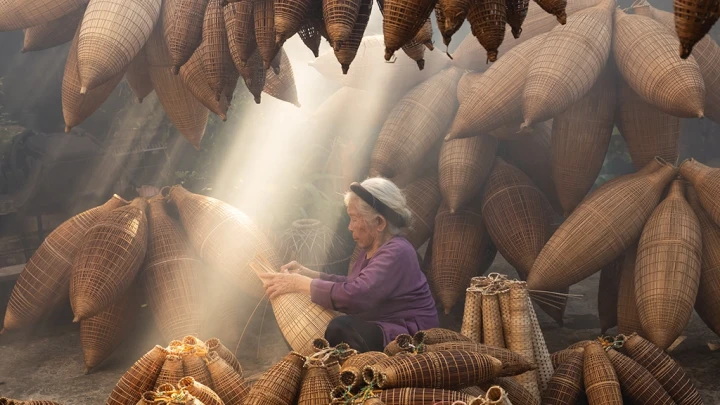
We begin at a heritage bamboo weaving village in the Red River Delta.
Photography Focus: Use window light for high-contrast portraits of artisans. Focus on the textures of bamboo fish traps. Welcome dinner in Hanoi.
Sunrise at the Quang Phu Cau incense village, followed by a heritage soy sauce factory.
Photography Focus: Drone patterns of scarlet incense bundles and leading lines created by thousands of ceramic jars.
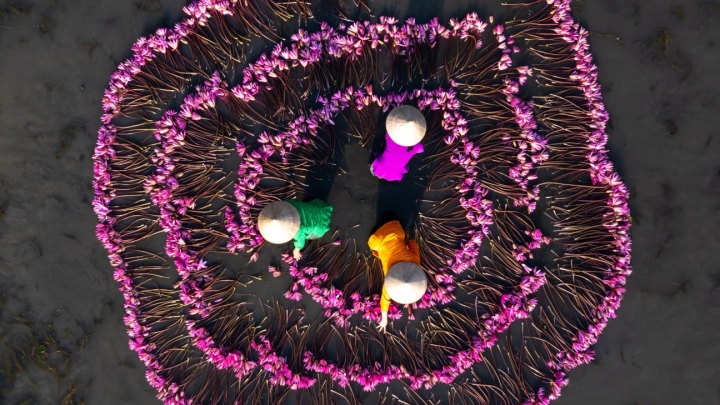
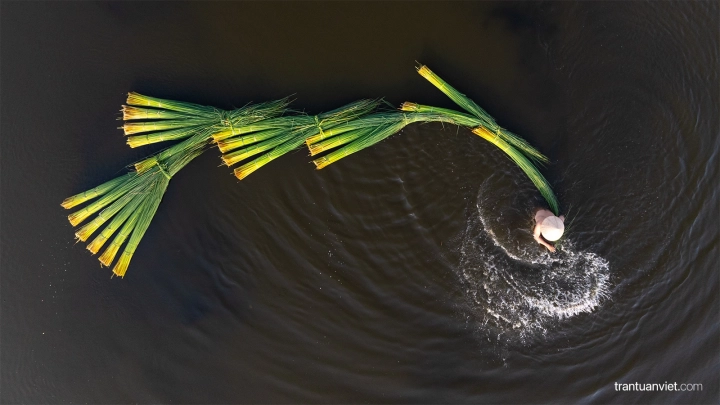
Dawn session with water lily arrangements, then to Duong Lam Ancient Village.
Photography Focus: Aerial abstract shapes of floating flowers. Environmental portraits against weathered laterite stone walls.
Journey to Mu Cang Chai via the scenic Khau Pha Pass.
Photography Focus: Wide-angle vistas of the Tu Le Valley. Sunset from the Garrya Mu Cang Chai Resort.
Sunrise at Mam Xoi hill and sunset at the Horse-shoe terrace.
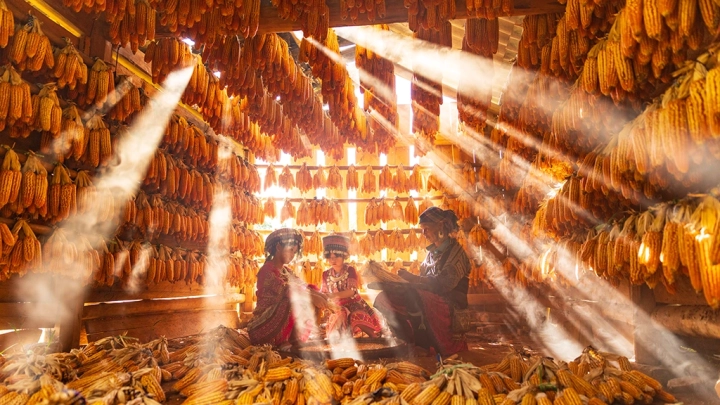
Photography Focus: Mastering "Rim-light" on golden rice stalks. High-contrast documentary shots in a traditional Hmong corn shack.
Morning flight to Hue. Night photography at the Citadel and Truong Tien Bridge.
Photography Focus: Long exposure light trails and architectural nightscapes under Hue’s historic lights.
Sunrise at Lap An Lagoon, followed by a royal-themed shoot with Ao Dai models in the Imperial City.
Photography Focus: Cinematic portraiture and sunset lantern ceremonies on the Perfume River.
Cable car to Ba Na Hills to photograph the Golden Hand Bridge at sunset.
Photography Focus: Capturing the colossal hands emerging from the mist. Overnight at Mercure French Village for crowd-free shots.
Sunrise on the bridge, then tracking the Red-shanked Douc Langur in Son Tra. Afternoon in Hoi An.
Photography Focus: Fast-shutter wildlife action. Blue hour street photography in the ancient town.
Morning with a theatrical mask painter and soulful portraits of local elders.
Photography Focus: Detailed macro shots of craftsmanship and emotive portraiture. Transfer to Da Nang Airport.